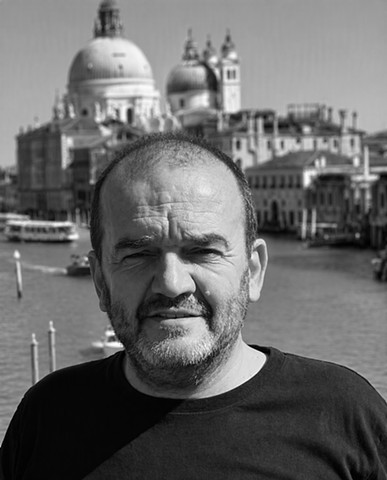
Petrax è un artista visivo contemporaneo italiano le cui opere astratte nascono da momenti di quiete colti nella natura che lo circonda. I suoi dipinti riflettono un equilibrio tra la creazione istintiva e l’esplorazione meditata, sviluppando un dialogo tra il grezzo e il raffinato che invita alla calma, alla contemplazione e all’introspezione.
L’arte occidentale postmoderna nasce e si struttura attraverso la decomposizione della rappresentazione: nella frattura irreparabile tra il segno e la cosa. Petrax, con la sua arte, non si sottrae a questa traiettoria. Tuttavia, il copione standard della postmodernità, ossia l’inesprimibilità della realtà che riduce ogni cosa a un concetto meramente eventuale e non necessariamente significativo, viene qui declinato in modo profondamente originale, attraverso un conflitto dinamico tra lo spazio pittorico e il graffito; un conflitto che conduce l’osservatore a un’attenta analisi della rappresentazione, per cogliere le ragioni sottese a questo contrasto originario.
Così, la rappresentazione dell’uomo, ridotta a un graffito essenziale su determinate armonie cromatiche dello spazio, rivela una visione antropologica non ingenua, nella quale l’essere umano permane, come macchia di sé stesso e segno dell’Altro, sullo sfondo di un flusso incapace di annientarlo completamente.
Cesare Catà
(historian of philosophy)
Petrax is an Italian contemporary painter whose abstract works emerge from quiet moments gathered in his surroundings nature. His painting reflect a balance between instinctive creation and thoughtful exploration, unfolding a dialogue between the raw and refined that invites stillness and contemplation.Post-modern western art is born and structured by the decomposition of representation: in the irreparable division between the sign and the thing. Petrax, with his art, does not escape from this track. But the standard script of post-modernity, that is the inexpressibility of reality that reduces everything to a mere not necessarily meaningful concept, is here declined in a profoundly original way, that is through a dynamic conflict between the painted space and the graffiti; a conflict that leads the observer to a careful examination of the representation, to grasp the reasons underlying the original contrast.
And so the representation of man, reduced to elementary graffiti on certain chromatic chords of space, reveals a non-naive anthropological vision, in which the human being remains - self-stain and sign of the Other - against the background of a flow incapable of annihilate it to the end.
Cesare Catà
(storico della filosofia)